Close Menu
Well Rounded Home – Tips to Furnish Your AppartmentWell Rounded Home – Tips to Furnish Your Appartment
  • Architecture
  • Decor
  • Exterior
  • Furniture
  • Home
  • Interior
  • Kitchen
  • Remodeling
What's Hot

Transform Your Backyard: Top Pool Ideas for Bairnsdale Homes

April 14, 2026

What Base Do You Need Under Pavers? A Homeowner’s Guide to Long-Lasting Paving

April 7, 2026

Why Do Households Need a Water Softener?

March 31, 2026

2026

  • – April (1)
    • Transform Your Backyard: Top Pool Ideas for Bairnsdale Homes
    • What Base Do You Need Under Pavers? A Homeowner’s Guide to Long-Lasting Paving
  • + March (5)
  • + January (6)

2025

  • + December (1)
  • + November (6)
  • + October (6)
  • + September (6)
  • + August (6)
  • + July (7)
  • + June (7)
  • + May (8)
  • + April (3)
  • + March (7)
  • + February (5)
  • + January (3)

2024

  • + December (8)
  • + November (4)
  • + October (5)
  • + September (3)
  • + August (4)
  • + July (1)
  • + June (4)
  • + May (2)
  • + April (4)
  • + March (2)
  • + February (6)
  • + January (8)

2023

  • + December (5)
  • + November (7)
  • + October (4)
  • + September (2)
  • + August (3)
  • + July (10)
  • + June (5)
  • + May (8)
  • + April (5)
  • + March (10)
  • + February (7)
  • + January (5)

2022

  • + December (6)
  • + November (3)
  • + October (8)
  • + September (5)
  • + August (11)
  • + July (4)
  • + June (11)
  • + May (8)
  • + April (8)
  • + March (1)
  • + February (10)
  • + January (4)

2021

  • + December (4)
  • + November (13)
  • + October (4)
  • + September (2)
  • + August (3)
  • + July (7)
  • + June (3)
  • + May (2)
  • + April (7)
  • + March (1)
  • + February (1)
  • + January (10)

2020

  • + October (1)
  • + August (2)
  • + June (1)
  • + May (1)
  • + January (1)

2019

  • + December (2)
  • + November (1)
  • + September (2)
  • + August (1)
  • + July (1)
  • + June (2)
  • + May (1)
  • + April (1)
  • + March (11)
  • + February (1)
  • + January (3)

2018

  • + December (3)
  • + November (2)
  • + October (4)
  • + September (2)
  • + August (3)
  • + July (8)
  • + June (6)
  • + May (1)
  • + April (5)
  • + March (1)
  • + February (2)
  • + January (4)

2017

  • + December (4)
  • + November (1)
  • + October (2)
  • + September (3)
  • + August (1)
  • + July (4)
  • + June (10)
  • + May (5)
  • + April (7)
  • + March (4)
  • + February (1)
Facebook X (Twitter) Instagram
  • Get Support
Well Rounded Home – Tips to Furnish Your AppartmentWell Rounded Home – Tips to Furnish Your Appartment
  • Architecture
  • Decor
  • Exterior
  • Furniture
  • Home
  • Interior
  • Kitchen
  • Remodeling
Well Rounded Home – Tips to Furnish Your AppartmentWell Rounded Home – Tips to Furnish Your Appartment
Home»Home»What Base Do You Need Under Pavers? A Homeowner’s Guide to Long-Lasting Paving
Home

What Base Do You Need Under Pavers? A Homeowner’s Guide to Long-Lasting Paving

Coen KeilyBy Coen KeilyApril 7, 2026No Comments6 Mins Read

A beautiful paved area can elevate your entire outdoor space — whether it’s a driveway, patio, pathway, or pool surround. But here’s the part most homeowners don’t see (and often underestimate):

What’s underneath your pavers matters just as much as the pavers themselves.

You can invest in premium materials and still end up with sinking, shifting, or uneven paving if the base isn’t done properly. So, what base do you actually need under pavers to ensure they last for years?

Let’s break it down in a practical, easy-to-understand way.

Table of Contents

Toggle
  • Why the Base Is So Important
  • Choosing the Right Pavers for Your Base
  • What Is a Paver Base Made Of?
    • 1. Subgrade (Existing Soil)
    • 2. Base Layer (Road Base or Crushed Rock)
      • Key Features:
      • Recommended Thickness:
    • 3. Bedding Layer (Sharp Sand)
      • Purpose:
      • Important:
    • 4. Jointing Sand (Between Pavers)
      • Benefits:
  • Do You Always Need Road Base?
    • When Road Base Is Essential:
    • When You Might Get Away Without It:
  • How Soil Type Affects Your Base
    • Clay Soils (Common in Australia)
    • Sandy Soils
    • Poor or Unstable Soil
  • What About Drainage?
    • Key Drainage Tips:
  • Common Mistakes to Avoid
    • Skipping Compaction
    • Using the Wrong Materials
    • Too Much Sand
    • Poor Edge Restraints
    • Ignoring Drainage
  • DIY vs Professional Installation
    • DIY Is Suitable If:
    • Consider a Professional If:
  • How Long Should a Proper Base Last?
  • Final Thoughts

Why the Base Is So Important

Think of your pavers as the surface layer — the visible finish. The base underneath is what provides:

  • Structural support
  • Load distribution
  • Drainage
  • Stability over time

Without a solid base, pavers can:

  • Sink or settle unevenly
  • Develop gaps or movement
  • Crack under pressure
  • Allow weeds to grow through

In short, the base is what determines whether your paving lasts 2 years or 20 years.

Choosing the Right Pavers for Your Base

While the base is critical, the type of paver you choose also plays a role in how your entire system performs over time. Different materials have different weights, porosity levels, and installation considerations — all of which can influence how the base should be prepared.

For example, natural stone options like travertine are popular for patios and pool surrounds due to their durability, cooling properties, and timeless appearance. However, because they are a premium material, they require a well-prepared and stable foundation to prevent movement or uneven settling.

If you’re exploring high-quality options, choosing the Best Travertine Pavers for your project is only part of the equation — ensuring they’re supported by a properly compacted base is what will ultimately protect your investment and keep them looking their best for years to come.

What Is a Paver Base Made Of?

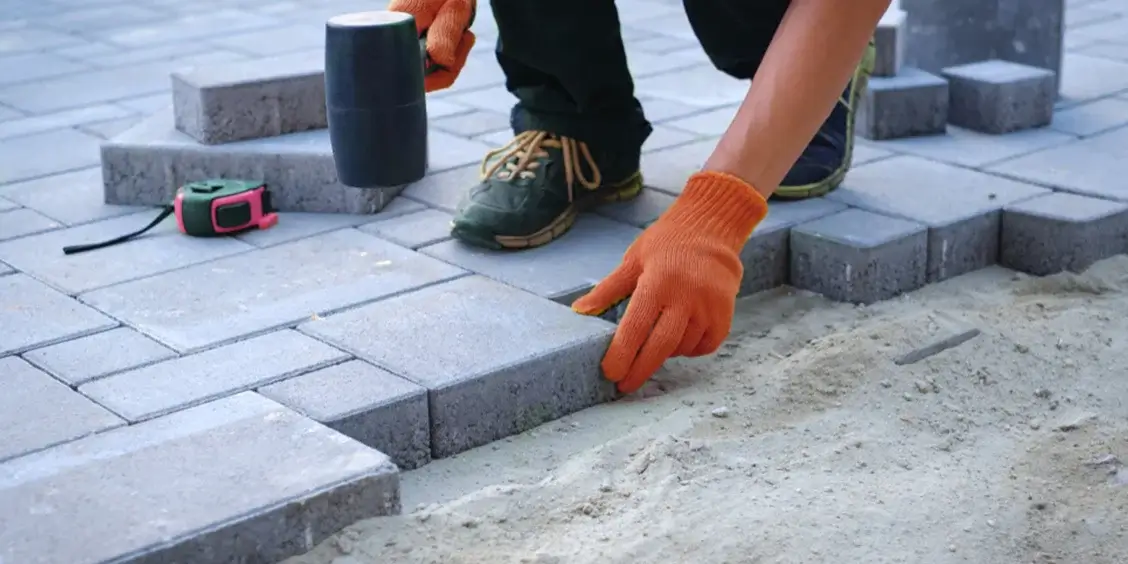
A proper paver base isn’t just “a bit of sand.” It’s a layered system, with each layer serving a specific purpose.

1. Subgrade (Existing Soil)

This is the natural ground beneath your paving area.

Before anything else happens, the subgrade needs to be:

  • Cleared of organic material (roots, grass, debris)
  • Levelled and compacted
  • Stable and well-draining

If the soil is soft or reactive (common in parts of Australia), additional preparation may be required to prevent movement.

2. Base Layer (Road Base or Crushed Rock)

This is the most critical layer.

Typically made from compacted crushed rock (often called road base), this layer provides the main structural support.

Key Features:

  • Compacted in layers using a plate compactor
  • Designed to handle weight (especially for driveways)
  • Helps prevent shifting and sinking

Recommended Thickness:

  • Pathways / patios: 75–100mm
  • Driveways: 100–150mm+ (depending on load)

A poorly compacted base is one of the most common reasons paving fails.

3. Bedding Layer (Sharp Sand)

On top of the base sits a thin layer of bedding sand.

Purpose:

  • Provides a smooth, level surface for laying pavers
  • Allows for minor adjustments during installation
  • Helps evenly distribute weight

Important:

This layer is not for structural support — it should only be around 20–30mm thick.

Too much sand = movement and instability.

4. Jointing Sand (Between Pavers)

Once pavers are laid, fine sand is brushed into the joints.

Benefits:

  • Locks pavers in place
  • Reduces movement
  • Helps prevent weeds and insects

In some cases, polymeric sand (which hardens when wet) is used for extra stability.

Do You Always Need Road Base?

In most cases, yes — especially for anything beyond decorative stepping stones.

When Road Base Is Essential:

  • Driveways
  • High-traffic areas
  • Clay or reactive soils
  • Areas with poor drainage

When You Might Get Away Without It:

  • Very light-use garden paths
  • Temporary installations

Even then, skipping a proper base is risky if you want a long-lasting result.

How Soil Type Affects Your Base

Not all ground conditions are equal — and this plays a huge role in how your base should be prepared.

Clay Soils (Common in Australia)

  • Expand and contract with moisture
  • Can cause movement and cracking

Solution:

  • Deeper base
  • Proper drainage
  • Geofabric layer (optional) to improve stability

Sandy Soils

  • Naturally free-draining
  • Less prone to movement

Solution:

  • Still require compaction
  • Base may be slightly thinner depending on load

Poor or Unstable Soil

  • May shift or settle over time

Solution:

  • Remove and replace with compacted fill
  • Use geotextile fabric to reinforce the base

What About Drainage?

Good drainage is critical for long-term paving performance.

Without it, water can:

  • Wash away bedding sand
  • Weaken the base
  • Cause pavers to sink or shift

Key Drainage Tips:

  • Slight slope (fall) away from structures
  • Avoid low spots where water pools
  • Use drainage channels if needed
  • Ensure base materials allow water movement

A well-prepared base should be firm — but not trap water.

Common Mistakes to Avoid

Even small shortcuts can lead to big problems down the track.

Skipping Compaction

Loose base material will settle over time, causing uneven pavers.

Using the Wrong Materials

Soft fill or ungraded gravel won’t provide proper support.

Too Much Sand

Thick bedding layers lead to movement and instability.

Poor Edge Restraints

Without solid edges, pavers can spread and shift outward.

Ignoring Drainage

Water damage is one of the biggest causes of paving failure.

DIY vs Professional Installation

You can install pavers yourself — but the base is where things often go wrong.

DIY Is Suitable If:

  • You’re working on a small area
  • Ground conditions are simple
  • You have access to compaction equipment

Consider a Professional If:

  • It’s a driveway or large space
  • Soil conditions are challenging
  • You want a long-term, high-quality finish

Professionals understand how to tailor the base to your site — which can save you costly repairs later.

How Long Should a Proper Base Last?

When done correctly, your paver base should last decades.

The pavers themselves might be replaced or updated over time, but the base underneath should remain stable if:

  • Proper materials were used
  • It was compacted correctly
  • Drainage was addressed

This is why investing in the base upfront is always worth it.


Final Thoughts

If there’s one takeaway from this guide, it’s this:

Your pavers are only as good as the base beneath them.

Cut corners here, and you’ll likely deal with sinking, shifting, and costly repairs. Get it right, and your paving will stay level, durable, and visually appealing for years to come.

Whether you’re planning a DIY project or hiring a professional, understanding the role of each layer — from subgrade to bedding sand — puts you in a much stronger position to achieve a long-lasting result.

Because when it comes to paving, what you don’t see is often what matters most.

Coen Keily

Related Posts

Transform Your Backyard: Top Pool Ideas for Bairnsdale Homes

April 14, 2026

Why Do Households Need a Water Softener?

March 31, 2026

Explore Home Appliances on Rent from Guarented Starting at 203/- Month

March 6, 2026

Common Noise Problems Sound Barriers Can Solve in Boise

January 29, 2026

Is a WiFi Camera for Home Worth It in 2026? What Homeowners Should Know

January 21, 2026

Water Softener for Hair Care: Does It Really Work?

January 6, 2026
Add A Comment
Top Posts

Transform Your Backyard: Top Pool Ideas for Bairnsdale Homes

April 14, 2026

What Base Do You Need Under Pavers? A Homeowner’s Guide to Long-Lasting Paving

April 7, 2026

Why Do Households Need a Water Softener?

March 31, 2026

Pest Control for Renters in Reston VA: How to Deal with Infestations Without Breaking Your Lease

March 17, 2026
Recent Posts
  • Transform Your Backyard: Top Pool Ideas for Bairnsdale Homes April 14, 2026
  • What Base Do You Need Under Pavers? A Homeowner’s Guide to Long-Lasting Paving April 7, 2026
  • Why Do Households Need a Water Softener? March 31, 2026
  • Pest Control for Renters in Reston VA: How to Deal with Infestations Without Breaking Your Lease March 17, 2026
  • One-Time Treatments Aren’t Enough in St. Louis: Here’s Why March 17, 2026
  • Beat the Brisbane Heat: Essential Air Conditioner Cleaning Tips for Summer March 16, 2026
Categories
  • Air Conditioner (3)
  • Architecture (7)
  • Decor (13)
  • Exterior (6)
  • Furniture (15)
  • Garden (6)
  • Home (354)
  • Interior (5)
  • Kitchen (10)
  • Moving (5)
  • News (7)
  • Pest Control (13)
  • Real Estate (1)
  • Remodeling (8)

2026

  • – April (1)
    • Transform Your Backyard: Top Pool Ideas for Bairnsdale Homes
    • What Base Do You Need Under Pavers? A Homeowner’s Guide to Long-Lasting Paving
  • + March (5)
  • + January (6)

2025

  • + December (1)
  • + November (6)
  • + October (6)
  • + September (6)
  • + August (6)
  • + July (7)
  • + June (7)
  • + May (8)
  • + April (3)
  • + March (7)
  • + February (5)
  • + January (3)

2024

  • + December (8)
  • + November (4)
  • + October (5)
  • + September (3)
  • + August (4)
  • + July (1)
  • + June (4)
  • + May (2)
  • + April (4)
  • + March (2)
  • + February (6)
  • + January (8)

2023

  • + December (5)
  • + November (7)
  • + October (4)
  • + September (2)
  • + August (3)
  • + July (10)
  • + June (5)
  • + May (8)
  • + April (5)
  • + March (10)
  • + February (7)
  • + January (5)

2022

  • + December (6)
  • + November (3)
  • + October (8)
  • + September (5)
  • + August (11)
  • + July (4)
  • + June (11)
  • + May (8)
  • + April (8)
  • + March (1)
  • + February (10)
  • + January (4)

2021

  • + December (4)
  • + November (13)
  • + October (4)
  • + September (2)
  • + August (3)
  • + July (7)
  • + June (3)
  • + May (2)
  • + April (7)
  • + March (1)
  • + February (1)
  • + January (10)

2020

  • + October (1)
  • + August (2)
  • + June (1)
  • + May (1)
  • + January (1)

2019

  • + December (2)
  • + November (1)
  • + September (2)
  • + August (1)
  • + July (1)
  • + June (2)
  • + May (1)
  • + April (1)
  • + March (11)
  • + February (1)
  • + January (3)

2018

  • + December (3)
  • + November (2)
  • + October (4)
  • + September (2)
  • + August (3)
  • + July (8)
  • + June (6)
  • + May (1)
  • + April (5)
  • + March (1)
  • + February (2)
  • + January (4)

2017

  • + December (4)
  • + November (1)
  • + October (2)
  • + September (3)
  • + August (1)
  • + July (4)
  • + June (10)
  • + May (5)
  • + April (7)
  • + March (4)
  • + February (1)
  • Get Support
© 2025 - Wellroundedhome.com- All Rights Reserved.

Type above and press Enter to search. Press Esc to cancel.