

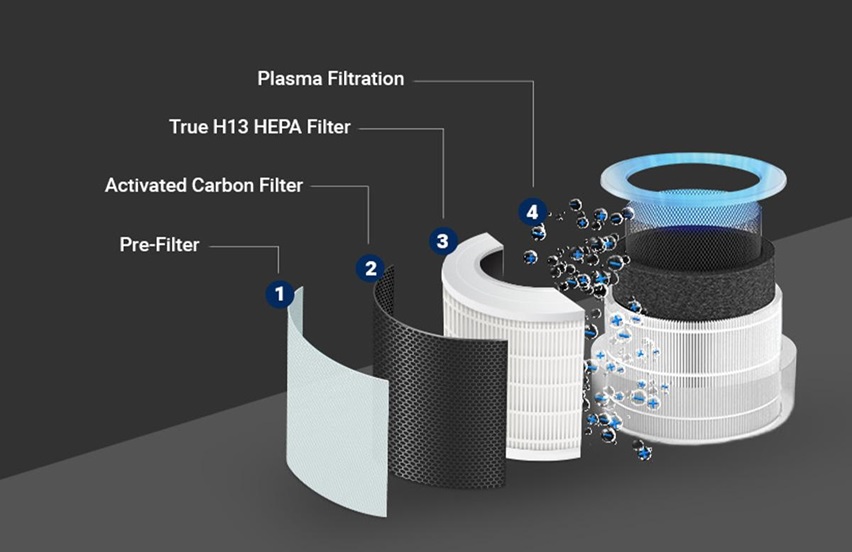
Many households invest in a HEPA air purifier to improve indoor air quality and reduce exposure to dust, allergens, smoke particles, and airborne pollutants. With growing awareness around indoor pollution, there is a wide range of home air purifier models available in the market with different filter technologies and smart features.
However, buying an air purifier is not limited to selecting a model with the highest specifications. Several factors, such as filter quality, airflow design, room compatibility, maintenance requirements, and operating costs, should be considered before buying.
Understanding these details can help buyers choose a HEPA air purifier that may suit their needs.
What You Might Be Overlooking While Buying a HEPA Air Purifier
- True HEPA vs HEPA-Type Filter
A true HEPA air purifier is designed to capture extremely fine airborne particles, including dust, pollen, pet dander, and PM2.5 pollutants. Whereas a HEPA-like filter may not meet the same filtration standards. It is advised to check whether the purifier uses certified HEPA filtration while buying an air purifier.
- Room Size and CADR Compatibility
An air purifier should match the size of the room where it will be used. A purifier designed for a small room may struggle to deliver clean air in a large room.
CADR, or Clean Air Delivery Rate, indicates how quickly an air purifier can filter air within a room. Choosing a purifier with insufficient CADR can reduce air cleaning efficiency, especially in homes exposed to outdoor pollution, smoke, or heavy dust accumulation. For example, if your room has an area of 400 sqft, it is recommended to buy an air purifier with a CADR of 355m3/Hr.
- Airflow Design and Air Circulation Efficiency
An air purifier with a poor airflow design may struggle to circulate clean air evenly, leaving certain areas less effectively cleaned. Proper air intake placement and circulation patterns can help improve overall purification efficiency. It is recommended to choose a HEPA air purifier that has a 360-degree air intake and adequate airflow capacity to ensure polluted air is drawn in and filtered efficiently.
- Filter Replacement Costs and Maintenance
Many buyers focus primarily on the MRP while overlooking associated long-term maintenance costs.
HEPA filters and activated carbon filters require periodic replacement to ensure clean air is delivered. However, replacement frequency depends on pollution level, room size, and daily usage. Choosing a home air purifier with easily available replacement filters can help avoid maintenance difficulties later.
- Noise Levels
Air purifiers often run for long hours, especially in bedrooms. A purifier with high decibels can cause discomfort to people. It is recommended to buy a HEPA air purifier that comes with a sleep mode. It is designed to reduce fan speed and operational noise while maintaining continuous air filtration.
- Placement Requirements Inside the Room
Placing an air purifier around furniture, or in corners, or too close to walls can restrict airflow.
It is recommended to place your air purifier in open areas and on an elevated platform where air intake and output may remain unobstructed.
Conclusion
A HEPA air purifier can improve indoor air quality when selected according to room size, filtration needs, and household conditions. However, factors such as CADR compatibility, airflow design, maintenance costs, noise levels, and replacement filter availability are equally important when buying an air purifier. An appropriate air purifier with proper filtration is more likely to deliver reliable long-term air purification performance.
